
The History of Chinese Physiognomy — 3,000 Years of Reading Faces and Hands
Explore the rich history of Chinese physiognomy (相学), from its origins in the Zhou Dynasty to its modern revival through AI-powered face and palm reading.
Chinese physiognomy — known as 相学 (xiàng xué) — is one of the oldest systematic approaches to reading character and fortune through physical appearance. Its roots stretch back over three millennia, weaving through philosophy, medicine, and statecraft before reaching the modern world.
Origins: The Zhou Dynasty (1046–256 BCE)
The earliest recorded references to physiognomy in China appear in Zhou Dynasty texts, where court officials were selected partly based on physical appearance and bearing. The classic text Guoyu (国语) records the use of physiognomy in assessing military commanders.
The practice was influenced by Confucian philosophy, which connected outer appearance to inner virtue — the idea that a person's moral character would eventually be reflected in their face. This concept, sometimes translated as "countenance reveals character," became foundational to Chinese physiognomy.
Systematization: The Han Dynasty (206 BCE–220 CE)
During the Han Dynasty, physiognomy was codified into a formal discipline. The legendary text 相经 (Xiàng Jīng, "Classic of Physiognomy") — attributed to various ancient masters — compiled observations on face shape, feature analysis, and their correlations with fate.
This period also saw physiognomy merge with Traditional Chinese Medicine (TCM). Practitioners noticed correlations between facial features and organ health. The nose connects to the lung; the eyes to the liver; the lips to the spleen — a system that persists in TCM diagnostic practice to this day.
The Tang and Song Dynasties: Golden Age of Physiognomy
The Tang (618–907) and Song (960–1279) dynasties were the golden age of Chinese physiognomy. Two canonical texts emerged:
-
麻衣神相 (Máyī Shén Xiàng) — "The Divine Physiognomy of Linen Robe" — attributed to the hermit sage Mayi Daozhe. This comprehensive text systematized the 12 palaces of the face, the five-element face types, and the year-by-year mapping of fortune across facial zones.
-
柳庄相法 (Liǔ Zhuāng Xiàng Fǎ) — A systematic analysis of face reading with a focus on career and life outcomes. Still studied by contemporary practitioners.
During this era, physiognomy was used by emperors to select officials, generals, and even consorts — making it a tool of political power as much as spiritual guidance.
The Ming and Qing Dynasties: Popular Spread
By the Ming (1368–1644) and Qing (1644–1912) dynasties, physiognomy had moved beyond the imperial court into popular culture. Wandering physiognomists became common figures at markets and temples, offering readings to common people.
This democratization of the practice led to the integration of physiognomy with feng shui, Ba Zi (birth chart analysis), and I Ching divination — forming the holistic system known as the Five Arts (五術): medicine, divination, astrology, physiognomy, and mountain (spiritual cultivation).
The 20th Century: Suppression and Resilience
The practice faced suppression in 20th-century China as it was categorized as feudal superstition during the Republican period and later the Cultural Revolution (1966–1976). Many classical texts were destroyed or went underground.
Yet the tradition survived — maintained by practitioners in Taiwan, Hong Kong, and among diaspora communities — and resurged with economic reforms in the 1980s.
Today: AI and the Ancient Art
The 21st century has seen a remarkable convergence: ancient pattern-recognition wisdom meets artificial intelligence. Modern face-reading platforms use computer vision to analyze facial proportions, symmetry, and feature relationships with a precision that would have astonished classical physiognomers.
This isn't a replacement of tradition — it's an amplification. The interpretive framework refined over 3,000 years now operates at the speed of a photograph.
The core insight remains unchanged: the face is a map. AI simply helps us read it faster.
Experience AI-powered physiognomy for yourself: Try a free reading →
Author

Categories
More Posts
How to Read Facial Features: Eyes, Nose, Mouth & More
A practical guide to interpreting the five major facial features — what your eyes, nose, mouth, ears, and forehead reveal about personality and fortune.
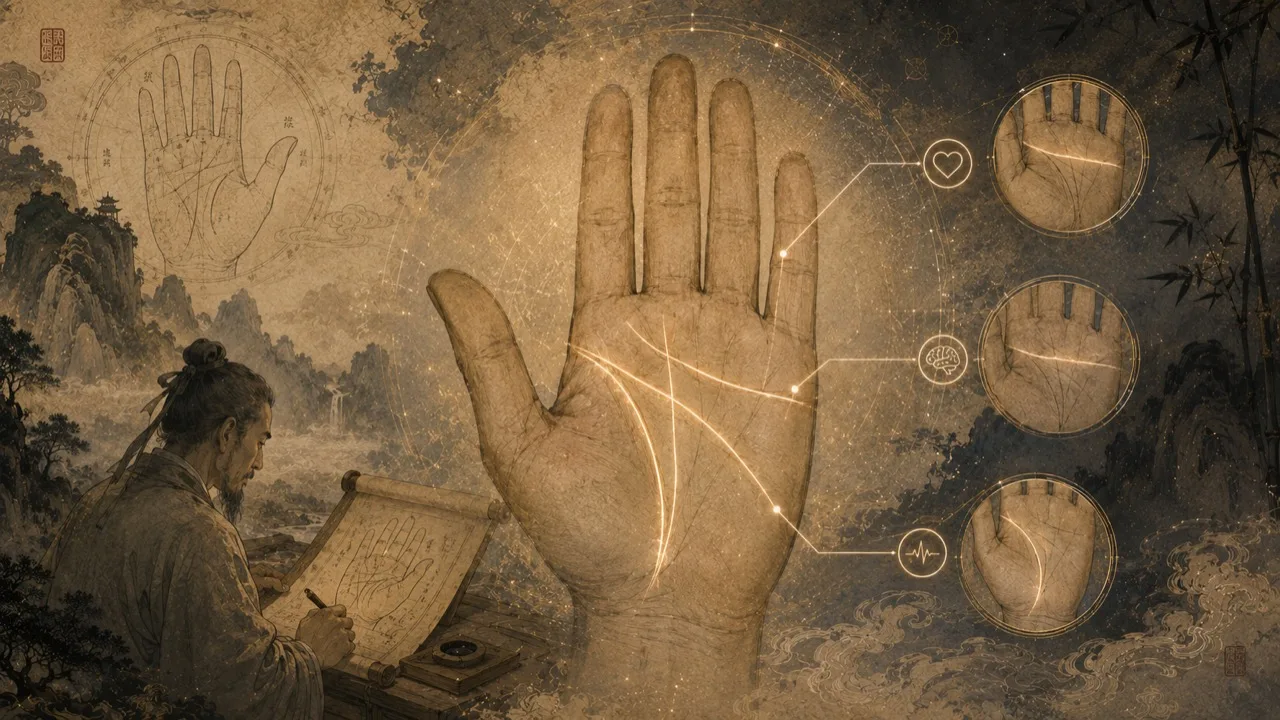
Introduction to Palm Reading: What Your Hand Reveals
A beginner's guide to palmistry — learn how the shape of your hand, the major lines, and the mounts reveal personality traits, talents, and life patterns.
Life Line, Heart Line, Head Line — The Three Major Palm Lines Explained
Understand what the three main lines on your palm really mean. A clear guide to reading the life line, heart line, and head line in palmistry.
Newsletter
Join the community
Subscribe to our newsletter for the latest news and updates